Top 6F Cable Manufacturers for Global Buyers?

Choosing a reliable 6f cable manufacturer requires more than comparing prices or reading product brochures. Global buyers must examine fiber quality, jacket materials, connector compatibility, production capacity, testing procedures, and export experience. A six-fiber cable may look simple on a specification sheet, yet performance can change sharply under heat, moisture, repeated bending, or long-distance installation.

The optical communications pioneer Charles K. Kao identified a central industry challenge when he wrote, “The main problem is to reduce the loss in the optical fiber.” His insight still matters. Low attenuation, stable signal transmission, and consistent manufacturing remain essential for modern network projects. This guide reviews six leading 6f cable manufacturers serving international buyers. It considers practical factors, including factory capability, certification evidence, customization, delivery reliability, and after-sales support. Product claims deserve verification. Photos are not enough.

The selected companies may suit different purchasing situations. One manufacturer may offer strong research capability, while another may provide faster customization or better support for regional installations. Buyers should also confirm whether “6f cable” refers to a six-fiber optical cable, a specific construction, or a supplier’s internal naming system. That detail can create costly misunderstandings.

Real projects are rarely perfect. Specifications change. Shipping schedules slip. Testing documents may arrive late. Careful buyers therefore compare samples, request recent reports, and discuss installation conditions before signing contracts. This article offers a practical starting point, not a substitute for technical inspection or independent verification.
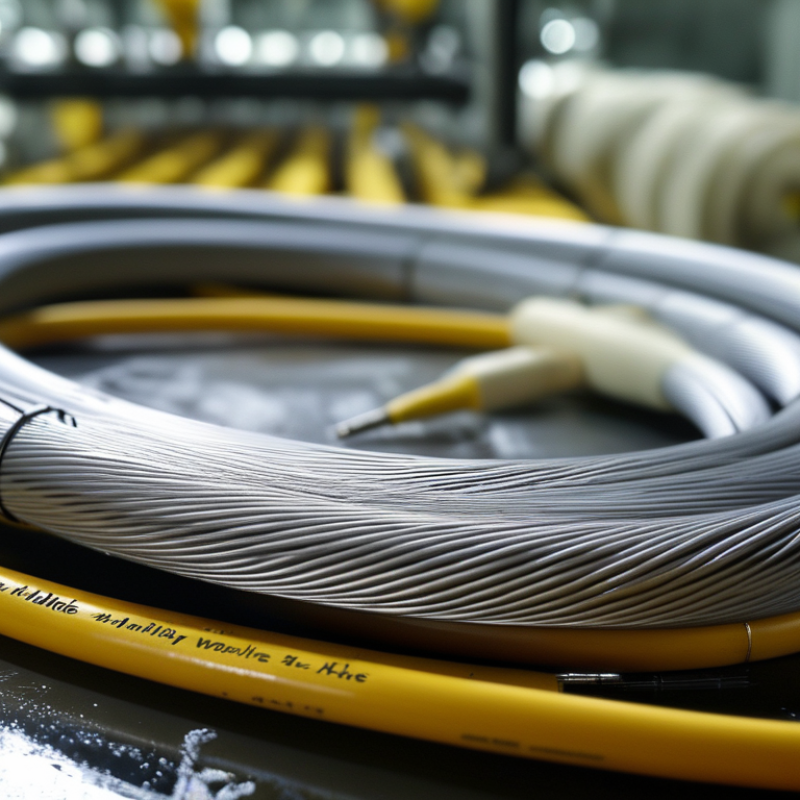
Top 6F Cable Manufacturers for Global Buyers?

What Defines a 6F Cable: Six Fibers, G.652.D, and IEC 60794

A 6F cable contains six optical fibers, not six wavelengths or six independent cables. Each fiber normally uses single-mode 9/125 μm construction, although the final design depends on the cable specification. For global buyers, the critical questions are fiber grade, testing evidence, and installation environment.

ITU-T G.652.D defines a widely deployed single-mode fiber with low water-peak performance across the O-band and extended transmission ranges. This supports access, metropolitan, and data-center links when paired with suitable equipment.

IEC 60794 provides the cable framework for mechanical, environmental, and transmission-related testing. Buyers should request attenuation, tensile-load, crush-resistance, bending, and temperature-cycle results. A certificate alone is not enough.

DEMAND Demand keeps rising. ITU’s Facts and Figures 2023 estimated that 67% of the world’s population was online, increasing pressure on physical networks. TeleGeography’s 2024 Global Bandwidth Research Service also reported continued growth in international bandwidth deployment. Six fibers can provide practical spare capacity, but only when the route plan is realistic. Sometimes, six is too few.

Experienced procurement teams should verify fiber compliance at the reel level, not only from a brochure. Check the G.652.D reference, IEC 60794 test method, cable diameter, water-blocking design, and connector compatibility. Some specifications appear complete but omit aging results. That omission deserves a second review.

How to Rank the Top Six Manufacturers by Capacity and Export Coverage

To rank the top six 6F cable manufacturers, start with verified capacity, not advertised factory size. Request annual output, active production lines, shift patterns, and average lead times. Capacity should match cable construction, fiber count, jacket material, and testing requirements. An impressive number means little if delivery records remain unclear. Numbers need proof.

Export coverage should be measured through shipment history, destination markets, distributor networks, and customs documentation. Check whether each manufacturer serves multiple regions consistently, rather than listing occasional deliveries. Review quality certificates, batch-testing reports, warranty procedures, and customer references. Production scale matters, but stable quality matters more. A supplier with broad coverage may still struggle during seasonal demand.

Tips: Build a scoring table with capacity, export reach, quality control, delivery reliability, and technical support. Give each category a clear weight. Ask for recent evidence, not old brochures. Compare sample results before placing volume orders. A perfect ranking is unlikely because public data can be incomplete. That weakness deserves attention. Recheck the ranking every six months as factories expand, markets change, and shipping performance shifts.

Top 6F Cable Manufacturers for Global Buyers? - How to Rank the Top Six Manufacturers by Capacity and Export Coverage

Anonymized comparison of large-scale six-fiber optical cable suppliers using manufacturing capacity, export reach, production integration, compliance, and delivery capability.

Rank Manufacturer Profile Estimated Annual Optical Cable Capacity Fiber Production Integration Export Coverage Manufacturing Footprint International Compliance Typical Lead Time Ranking Score
1 Profile A
Large integrated optical-network manufacturer
1.8–2.5 million cable km/year
High-volume loose-tube and distribution cable lines
In-house optical-fiber drawing, coloring, cabling, testing, and final assembly 70+ export markets
Asia-PacificEuropeMiddle EastAmericas
Multiple large-scale plants with dedicated export production lines ISO 9001ISO 14001IEC-tested designsRoHS/REACH support 4–8 weeks for standard 6F cable 94/100
2 Profile B
Global fiber and connectivity producer
1.5–2.1 million cable km/year
Strong capacity for telecom and access cable
Integrated fiber, cable, connector, and optical-component manufacturing 60+ export markets
Asia-PacificAfricaEuropeLatin America
Several regional production and technical-support facilities ISO 9001ISO 14001IEC 60794RoHS compliance 5–9 weeks for standard 6F cable 91/100
3 Profile C
High-volume communications-cable specialist
1.2–1.8 million cable km/year
Flexible production for custom sheath and armoring options
Fiber sourcing plus in-house coloring, ribboning, cabling, and optical testing 50+ export markets
Southeast AsiaEuropeGulf regionAfrica
Two or more dedicated cable plants and regional distribution partners ISO 9001IEC 60794CPR optionsRoHS support 4–7 weeks for standard configurations 87/100
4 Profile D
Specialized fiber-optic cable exporter
0.8–1.3 million cable km/year
Focused on access, FTTH, indoor, and outdoor cable
In-house cable extrusion, fiber coloring, stranding, sheath production, and testing 40+ export markets
Asia-PacificMiddle EastAfricaSouth America
One major plant supported by export-oriented warehousing ISO 9001IEC-tested productsRoHS support 3–6 weeks for standard 6F cable 82/100
5 Profile E
Customizable telecom-cable manufacturer
0.6–1.0 million cable km/year
Competitive for private-label and project orders
Partial integration with in-house cabling, jacketing, printing, and routine performance testing 30+ export markets
AsiaAfricaMiddle EastLatin America
One main production site with contract-supported component sourcing ISO 9001IEC 60794 optionsRoHS support 4–8 weeks depending on customization 77/100
6 Profile F
Mid-sized export-focused cable producer
0.4–0.8 million cable km/year
Best suited to standard 6F specifications and medium projects
In-house stranding, sheath extrusion, labeling, and final inspection; fiber supplied by qualified partners 20+ export markets
Asia-PacificAfricaRegional distributors
Single specialized plant with scalable production shifts ISO 9001IEC test reportsRoHS documentation 3–7 weeks for standard 6F cable 71/100

Assessment basis: Ranking weights are assigned to annual production capacity, number of export markets, manufacturing integration, international compliance documentation, product breadth, and standard delivery capability. Company identities are intentionally anonymized; capacity figures are presented as public-disclosure-based industry ranges rather than audited financial data.

6F Cable Performance Benchmarks: ≤0.35 dB/km at 1310 nm

Top 6F Cable Manufacturers for Global Buyers

For global buyers, a six-fiber cable should meet a clear attenuation benchmark: no more than 0.35 dB/km at 1310 nm. This figure reflects light loss through the fiber under controlled test conditions. It helps compare manufacturers fairly. However, the number alone can mislead. Cable length, bend radius, temperature, and connector quality also affect field performance.

Experienced purchasing teams should request factory test reports, fiber attenuation curves, and sample inspection records. A reliable supplier should explain testing methods, measurement uncertainty, and acceptable production variation. Ask whether the result applies to the fiber itself or the finished cable. That distinction matters. A cable may pass laboratory testing yet perform differently after pulling through a crowded conduit. Site measurements using an OTDR and light source can reveal hidden bends, poor splices, or unexpected reflection points.

Tips: Confirm the 1310 nm result before comparing prices. Check attenuation at 1550 nm too, especially for longer routes. Review minimum dynamic bending performance and jacket durability. Keep a retained sample for future quality checks. Do not rely on one test sheet.

Some buyers focus too heavily on the lowest loss value. I have found that installation consistency often matters more. A difference of 0.02 dB/km may disappear beside careless splicing. The benchmark remains valuable, but it needs practical verification. That part is sometimes overlooked.

Comparing Bend Radius, Jacket Standards, RoHS, and CPR Compliance

Top 6F Cable Manufacturers for Global Buyers?

A six-fiber cable can look identical across suppliers, yet installation performance may differ sharply. Check the stated outer diameter before comparing bend radius. IEC 60794 testing commonly evaluates static and dynamic bending, while many designs use 10 times diameter for static bends and 20 times for movement. These figures are not universal. Always request the manufacturer’s test method, temperature range, and minimum radius under load.

Jacket selection affects safety, routing, and acceptance testing. LSZH jackets should address IEC 60754 for halogen acidity and IEC 61034 for smoke density. Flame performance may reference IEC 60332. In Europe, EN 50575 connects fiber cables with CPR reaction-to-fire classes, from Aca to Fca, plus smoke, droplets, and acidity ratings. A CPR class alone is incomplete. Ask for the full classification, declaration of performance, and notified-body documentation.

RoHS compliance requires controlled restricted substances under Directive 2011/65/EU and later amendments. The European Commission’s 2023 RoHS evaluation stresses stronger supply-chain evidence and market surveillance. Meanwhile, the Grand View Research 2024 fiber-optic cable report estimates the global market will grow at about 11% annually through 2030. Growth can encourage shortcuts. I would not trust a copied certificate or a generic “RoHS compliant” label. Request batch traceability, jacket test results, bend-cycle records, and independent reports. One practical weakness remains: buyers often compare price before checking connector loss and field routing space. That decision can become expensive later.

Global Buyer Checklist: Lead Times, Warranty Terms, Testing, and Pricing

Top 6F Cable Manufacturers for Global Buyers?

Global Buyer Checklist: Lead Times, Warranty Terms, Testing, and Pricing

Selecting a 6F cable manufacturer requires more than comparing unit prices. Ask for a written production schedule, not a broad promise. Standard orders may ship in 15 to 30 days, while customized jackets or connectors can take longer. Request samples from the same production line. A sample made by engineers may not represent factory output.

Warranty terms need careful reading. Confirm coverage length, replacement procedures, and exclusions for installation damage. A reliable supplier should identify cable bend radius, tensile limits, and storage conditions. Keep these details in the purchase agreement. Verbal assurances fade quickly.

Testing evidence matters. Request attenuation, insertion loss, return loss, and continuity results for each batch. Independent laboratory reports add confidence, but factory test records still reveal daily consistency. Check calibration dates on testing equipment. Small details matter here. Pricing should include connectors, packaging, inspection, freight assumptions, and possible tooling fees. A low quote can become expensive after revisions and delays.

I would also compare payment terms and communication speed. Slow replies may signal future trouble, though this is not always true. Ask for a pilot order before committing to volume. Review ten randomly selected cables, not just the best sample. Leave room for honest uncertainty. No supplier performs perfectly forever. The stronger choice is the one that measures problems, reports them clearly, and corrects them quickly.

Top 6F Cable Manufacturers for Global Buyers

Global Buyer Checklist: Lead Times, Warranty Terms, Testing, and Pricing

The chart compares six anonymized supplier profiles using common global procurement benchmarks for 6-fiber optical cable. Shorter lead times, longer warranty coverage, broader testing documentation, and lower indicative pricing generally improve buyer value. Pricing is shown in USD per kilometer and should be validated against fiber type, cable structure, order volume, certifications, and destination.